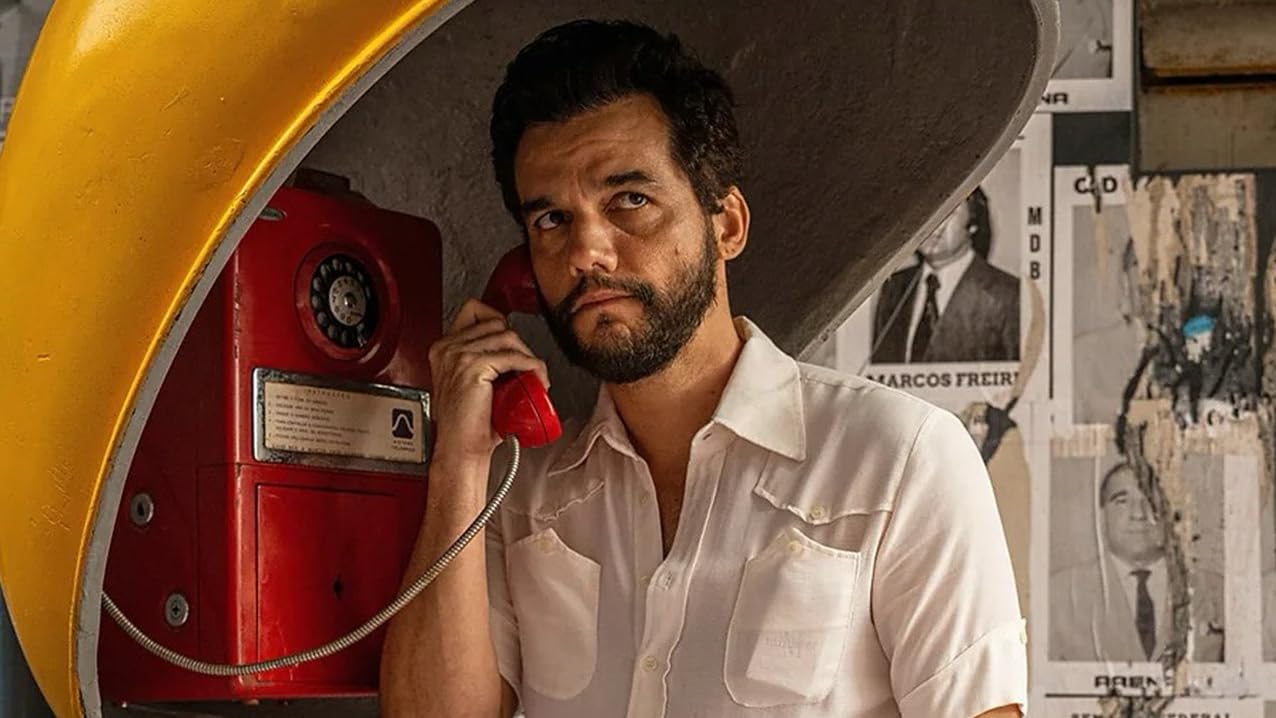
After 16 weeks of release, The Secret Agent has sold more than 2.45 million tickets nationwide (Brazil’s theatrical figures have not been disclosed by gross, but if converted to the norm American ticket costs, the amount would equal throughout $40 million).
It has also stayed in the top five of the nation’s box office. After receiving an award at the Cannes Film Festival, it went on to get four Oscar nominations, making it the first successive Brazilian film to be recognised in the categories of best picture and best international film.
Although the tone and style of these films differ greatly, they both forcefully and poignantly recall the peak of the Brazilian military tyranny in the 1970s. This is an important backdrop because both films were produced during a more recent period of repression in Brazilian history, Jair Bolsonaro’s rule from 2019 to 2022.



In a way, Brazil has a thriving film culture. “It’s a constitutional right,” Secret Agent star Moura added. “In the Brazilian Constitution, it’s written that the government has to provide culture to the people.”
Mendonça Filho, his director of Secret Agent, adds the current state of affairs: “We’re back at this place where we should never have left: Getting public funds for artistic expression and for the distribution of works of art made by Brazilian artists.”
Growing up, Moura heard tales about two cinema theatres in town squares in many Brazilian cities, both large and small, during the 1950s and 1960s. “Going to the movies were part of the daily lives of people,” he claims.
Strong and constant censorship was practiced. The evolving Luiz Inácio Lula da Silva, who had been president twenty years prior and had laboured to restore significant cultural infrastructure, was then elected.
If Brazilian cinema possibilities are often correlated with their political period, then the industry is currently undergoing reconstruction and change. It is impossible to overstate the buoying supplied by two wildly popular, utterly autonomous dramas.
Wagner Moura has observed that “The Secret Agent”‘s popularity is causing some controversy at home. He added, “On the far right, man, they’re very, very efficient in demonizing artists in Brazil. If you go to social media, you’re going to see lots of YouTubers, whatever you call these people, saying that Kleber and I are part of this group of artists taking advantage of public funding to get money for ourselves, which is so absurd. It really breaks my heart to see these narratives taking off. People really buy that.”
On the other hand, the emotion emanating from Brazil has not only become legendary among American viewers of the Oscar campaign, but it also serves as a critical source of inspiration for artists like Moura, who had not acted in a Brazilian film for more than ten years before The Secret Agent.
“Brazilians seeing themselves like this creates identity, this creates self-esteem, this creates a sense of understanding of what kind of people we are,” he adds. “When I see Brazilians showing pride, dressing up like Dona Sebastiana in the film in the pure Brazilian Carnival fashion, I think it’s just fucking beautiful. It makes me go, ‘Okay, fuck it. I’ll keep fighting for this.’”