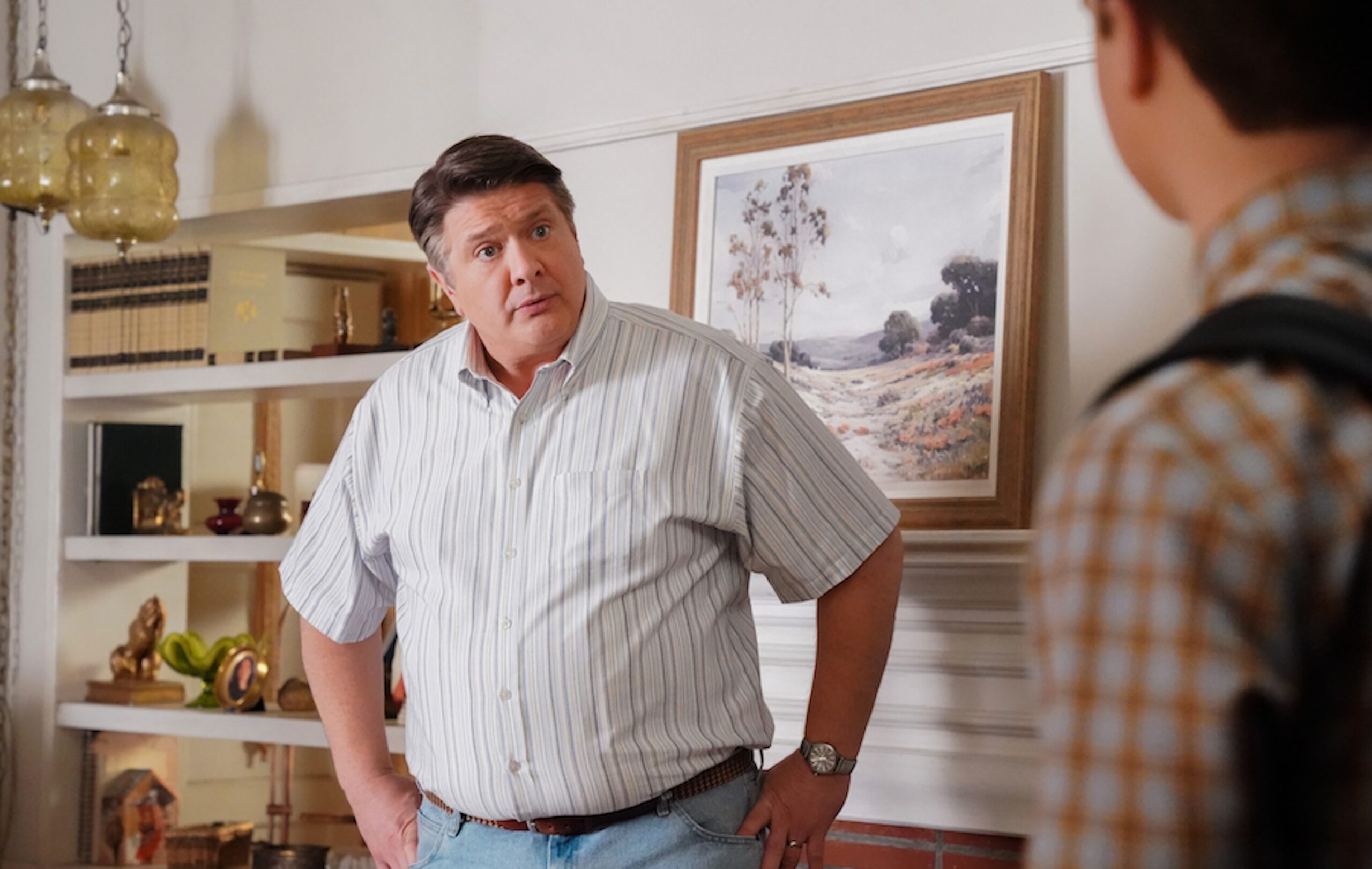
Chuck Lorre has expressed remorse over a fundamental creative choice made early in “The Big Bang Theory”: making Sheldon Cooper’s father’s passing a crucial aspect of the character’s early years. Immediately after the antepenultimate episode of “Young Sheldon,” which ended with the off-screen demise of George Cooper Sr.portrayed on the prequel by Lance Barber, Lorre acknowledged his displeasure in a vanity card.
“Eighteen years ago, when we were writing and producing ‘The Big Bang Theory,’ it seemed like a good idea to imagine that Sheldon’s childhood was deeply disrupted by the loss of his father,” Lorre penned. “No one could have thought that someday we would regret that decision. That someday is now.”
“There were a lot of tears on stage when this episode’s last scene was shot,” he added. “A reminder that we had all fallen in love with a fictional character. Which is, itself, a reminder to love the characters in our life who are real. To do otherwise is to live with regret.”
For a significant portion of “The Big Bang Theory,” Jim Parsons’ character, Sheldon Cooper, portrayed his father as an unfaithful husband to Mary, a heavy drinker, and a careless father. But, in “Young Sheldon,” George was portrayed as a different person—a flawed but loving, caring father who cherishes his family.


In addition to portraying George as a good man, the spin-off reveals that Sheldon and George had a closer bond than Sheldon’s adult memories first revealed. There aren’t many occasions where Sheldon expresses overt hostility towards his father, and even the infidelity he’s long hated turns out to have been an error of judgment.