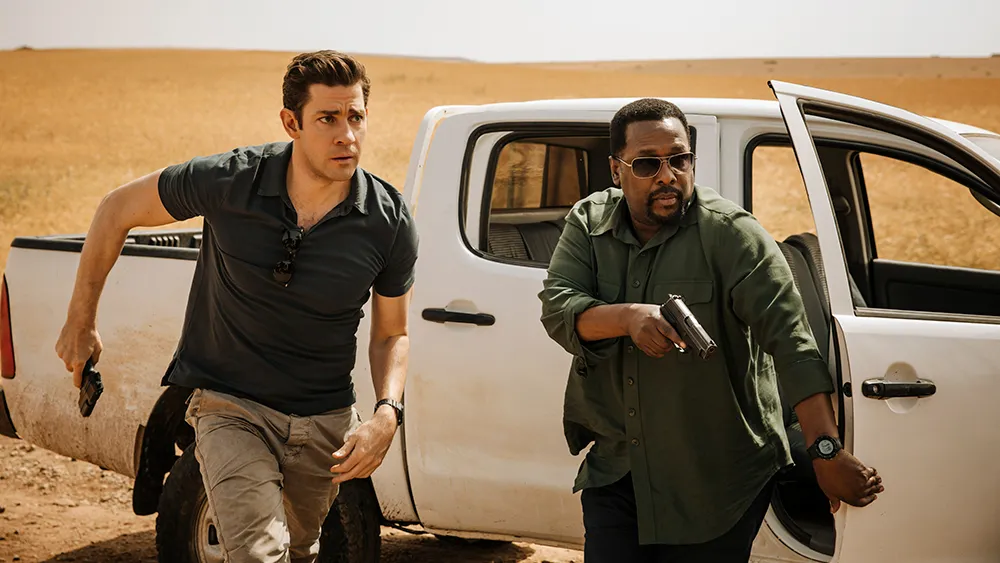
A scene from Season 2 of the Prime Video partisan thriller, which debuted in 2019, has gone viral in the wake of the U.S. military strike that resulted in the questioning and arrest of Venezuelan President Nicolás Maduro. In it, John Krasinski’s character Jack Ryan, a CIA analyst, explains why Venezuela should be seen as “a major threat on the world stage” alongside, if not more so than, common suspects like North Korea, China, and Russia.
Ryan states in the scenario, “The fact is that Venezuela is arguably the single greatest resource of oil and minerals on the planet,” after pointing out that the Latin American nation has more gold than all of Africa’s mines combined and the world’s largest oil reserve. “So why is this country in the midst of one of the greatest humanitarian crises in modern history?”
Ryan also notes that Venezuela is “within 30-minute range from the US of next-gen nuclear missiles,” in contrast to other nations that have experienced financial ruin, like Yemen and Iraq. The six-year-old video received accolades from social media users for effectively illustrating the present state of affairs in Venezuela.



Carlton Cuse, who co-created Jack Ryan with Graham Roland and oversaw the first two seasons, is aware of the similarities. He told Deadlime, “As a storyteller, what always surprises you is how often real-world events catch up to fiction. The goal of that season wasn’t prophecy — it was plausibility. When you ground a story in real geopolitical dynamics, reality has a way of making it rhyme.”
He discussed the decision to make Venezuela the focus of the second season of the show, which was conceptualized almost seven years ago.
He added, “Graham Roland and I weren’t making a statement — we were telling a fictional character-driven thriller rooted in Venezuela’s long-standing strategic relevance. Our job was to make the situation feel credible. We approached Venezuela as a country where democratic ideals, economic reality, and geopolitical interests have been in tension for a long time — and where choices are never simple.”